

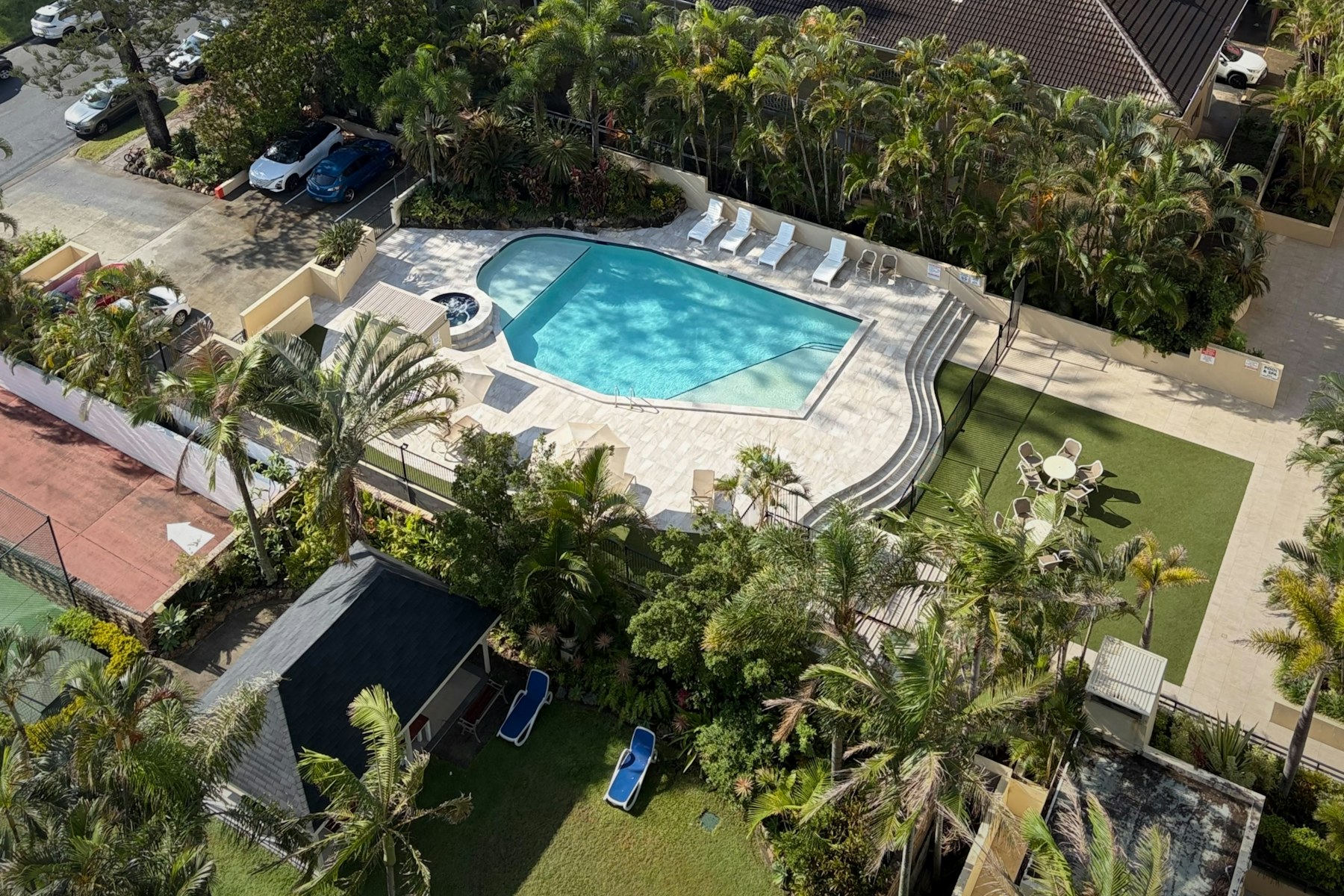
Quick answerEvery Queensland retirement village scheme operator must keep three separate funds. Residents pay for day-to-day services through the general services charges fund and for maintenance and repairs of capital items through the maintenance reserve fund. The scheme operator alone funds the replacement of capital items through the capital replacement fund. A capital improvement, meaning something provided for the first time, is not paid from any of the three funds.
Last reviewed: 22 November 2026
Key points at a glance
Pool pumps fail, gardens need tending and buildings need repainting. In a Queensland retirement village, the question is not only what the work costs but which fund pays for it. The answer decides whether the cost falls on residents or on the scheme operator.
The Retirement Villages Act 1999 (Qld) separates everyday services, maintenance and repairs, replacement and new improvements, and sets strict rules on how each fund may be used. Use the interactive guide below to see how common expenses are generally classified.
Interactive guide
Which retirement village fund pays?
1. Choose an area
2. Select an expense
General information only. The correct fund depends on the nature and extent of the work, who owns the item, the residence contract and the Retirement Villages Act 1999 (Qld).
1. What Are the Three Compulsory Funds?
| Fund | What it pays for | Who contributes |
|---|---|---|
| General services charges fund (section 102AA) | Services supplied to all residents, such as management, administration, gardening and general maintenance | Residents, through the general services charge |
| Maintenance reserve fund (section 97) | Maintaining and repairing the village’s capital items | Residents only |
| Capital replacement fund (section 91) | Replacing the village’s capital items | The scheme operator only |
Capital items include the operator’s buildings and structures, plant and equipment used to run the village, and village infrastructure such as roads, pathways, drainage and landscaping. Each fund must be kept separately and used only for its own purpose, and using a fund for anything else is an offence. The Queensland Government also summarises the three funds on its compulsory funds page.
2. Maintenance, Repair or Replacement?
The Act defines each type of work, and the definition usually decides the fund:
- Day-to-day maintenanceMaintenance carried out regularly and with little expense. This is a general service and cannot come from the maintenance reserve fund
- Maintenance and repairsKeeping a capital item in good condition and working order, or restoring it by fixing or replacing parts. Paid from the maintenance reserve fund
- ReplacementSubstituting the same type of item or an equivalent item. Paid from the capital replacement fund
- Capital improvementThe first-time provision of a capital item. Not paid from either reserve fund
Practical exampleA village pool pump starts leaking. Replacing its seals restores the existing pump, so the work is a repair paid from the maintenance reserve fund. If the pump is beyond repair and is swapped for an equivalent pump, that is a replacement and the scheme operator pays through the capital replacement fund. If the village adds a pool heater it never had before, that is a capital improvement, which the operator pays for unless residents requested it.
3. Who Pays for Capital Improvements?
Under section 90, the scheme operator is solely responsible for the cost of capital improvements to the village, including communal facilities it owns. There are two exceptions:
- A resident’s own unitUnder section 90A, if a resident asks in writing for an improvement to their unit and the operator agrees, the resident pays
- Requested by residentsUnder section 90B, if residents request an improvement by special resolution at a residents meeting and the operator agrees, all residents at the time of the vote share the cost
If a resident or the residents committee asks, the operator must obtain at least 2 quotes under section 90D. Under section 90E, the operator may require payment before the work is done, but must hold the money in trust and refund any excess.
4. What Happens if a Fund Runs Short?
Both reserve funds are budgeted each financial year using an independent quantity surveyor’s report on expected costs over the next 10 years. A full report is required every third financial year, with updated reports in between. If spending is more than the fund holds:
- Capital replacement fundUnder section 92(5), the operator must pay the difference
- Maintenance reserve fundUnder section 98(5) and (6), the operator must pay the difference, which is treated as an interest-free loan to the fund
Under section 93(3), the operator may use ingoing contributions towards its capital replacement contribution but must not otherwise raise that contribution from residents. Separate rules apply to some older residence contracts that require part of the services charge to go towards capital replacement. For more on the costs residents pay on entry, during residence and on exit, see our guide to retirement village fees.
Body corporate property is differentIf part of the village is body corporate property under the Body Corporate and Community Management Act 1997 (Qld), neither the maintenance reserve fund nor the capital replacement fund can be used for its maintenance, repair or replacement. The body corporate’s own funds apply instead.
Frequently Asked Questions
Who pays to replace a broken item in a Queensland retirement village?
If the item is a village capital item and it is replaced with the same type of item or an equivalent item, the scheme operator pays through the capital replacement fund. Under section 93(3) of the Retirement Villages Act 1999 (Qld), the operator must not raise its capital replacement contribution from residents, other than by using ingoing contributions. A resident who deliberately damages an item, or causes accelerated wear, is liable for the cost of replacing it under section 96.
Can the maintenance reserve fund be used for day-to-day maintenance in a Queensland retirement village?
No. Under section 97(4), the maintenance reserve fund cannot be used for day-to-day maintenance, meaning maintenance carried out regularly and with little expense. Those costs are general services paid through the general services charge.
Who pays for new facilities in a Queensland retirement village?
Under section 90, the scheme operator is solely responsible for the cost of capital improvements. The exceptions are improvements a resident requests in writing for their own unit (section 90A) and improvements residents request by special resolution at a residents meeting (section 90B), where the operator agrees to make them.
What happens if the maintenance reserve fund does not have enough money?
Under section 98(5) and (6), the scheme operator must pay the difference between the amount to be spent and the amount held in the fund. That payment is treated as an interest-free loan from the operator to the fund.
Can an operator pay an expense from whichever fund has money?
No. Each fund may only be used for its own purpose, and amounts properly payable into one fund must not be paid into another (sections 94(3) and 100(3)). Using a fund for another purpose is an offence.
Key takeawayAsk two questions about any village expense: is the work routine, a repair, a replacement or something new, and who owns the item? Residents fund general services and maintenance, the scheme operator funds replacement, and new improvements generally sit with the operator unless residents asked for them.
How Vojdani Lawyers Can Assist
Vojdani Lawyers acts for retirement village scheme operators and for people moving into a retirement village throughout Queensland. We advise operators on fund obligations and budgets, residence contracts, disclosure documents and capital improvement requests, and explain to incoming residents how the funds affect their costs before they sign.
Contact Vojdani Lawyers for advice on retirement village funds. Contact our office for costs related to your matter. We endeavour to respond to enquiries as soon as possible.
Insights
Related articles
Practical guides on retirement living from our Gold Coast team.
 Article · 5 Aug 2026Retirement Village Exit Entitlements: Lessons from Two Recent Queensland DecisionsTwo QCAT decisions on retirement village exit fees and resale obligations show why following the right dispute…Read article
 Article · 23 Jul 2026Buying or Selling a Manufactured Home in Queensland? Form 19 and Site Agreements ExplainedBuying or selling a manufactured home in a Queensland residential park? Form 19, site agreements, disclosure periods,…Read article
 Article · 13 Jul 2026Site Rent Increases in Queensland Manufactured Home Parks: What Does the Law Say?A QCAT decision on an excessive site rent increase in a Maryborough residential park, and how Queensland law on site…Read article